Women Soldiers in the Civil War

Tags

, , , ,

–by Tessa Wakefield, USCHS intern

Rosie the Riveter

When I think of women and their involvement in American wars, the images that come to mind are typically nurses or Rosie the Riveter. This does make sense, as these are the images that have been promoted: at many of the Smithsonian gift shops, you can purchase Rosie memorabilia, thus making her even more the epitome of women’s war efforts. But women have been more deeply involved than you might have been taught in your average American history class. From spies, to nurses, to factory workers, women have been a part of all aspects of American warfare from the get-go.

With the recent announcement of women now being able to serve in military combat roles, it’s interesting to look back at their historic place in combat. Women have been fighting in battles since the American Revolution. Granted, it generally was not known they were doing so, but that doesn’t discount their involvement or contributions. The Civil War, for example, saw a great influx of women joining the military, often disguised as men.

It’s quite the challenge to pinpoint the exact number of women who fought in the Civil War. There were at least 250 serving in the Confederate Army with many more probably going undetected. These women were careful to hide their identities, adopting male names and mannerisms. They chopped off their hair, bound their chests, and often covered their necks to hide the fact that they didn’t have an Adam’s apple.

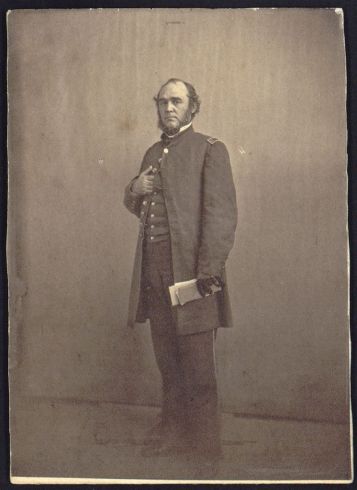
Civil War soldier's portrait

Jennie Hodgers fought as Albert Cashier. (Abraham Lincoln Presidential Library and Museum)

The enlistment process was far less rigorous than it is today, making it easy for women to slip into the ranks unnoticed. You would merely have to produce an ID and state your name and job once arriving at the recruiting office. Furthermore, the physical examinations were far from thorough. Most doctors only measured things such as height and checked to see if the recruit had teeth and fingers. I feel like those qualifications would be fairly simple to meet. Once enlisted, however, women had to keep a low profile in order to stay hidden.

They became so good at this that they would really only be discovered if wounded or killed. Mary Owens, aka John Evans, for example, served 18 months before being wounded in the arm and discovered. She had mastered being a man. If she hadn’t been hurt, who knows how long Owens could’ve stayed enlisted? I would be curious to see her fellow soldiers’ reactions when they found out who she really was. Some women managed to avoid all detection. Mary Stevens Jenkins was wounded several times over the course of two years yet was discharged without anyone realizing who she actually was.

Jenni Hodgers is one of the more well-known female soldiers. Of the ladies I read about, she stuck out. Hodgers created the identity of Albert Cashier, enlisted, and served for three years, fighting in 40 battles. She was present at some of the major events of the war, such as the siege of Vicksburg. She would then go on to live as a man for many years following the war, only being revealed when she was injured in a car accident.

I think it’s pretty cool that female soldiers played a part in Civil War battles. Their presence is a piece of history worth exploring. They fought alongside their brothers and husbands, serving their country proudly.

Works Consulted
Cincinnati Civil War Round Table talk

NPR story on Jennie Hodgers/Albert Cashier

NY Times story

National Archives’ Prologue Magazine article

Race & Slavery in Early Washington: Yarrow Mamout

Tags

, , , , ,

Editor’s Note: We’re back to regular posting after an unexpected hiatus. Thanks to our newest poster, author James Johnston, for getting us started. His piece includes some information from his recent book, From Slave Ship to Harvard: Yarrow Mamout and the History of an African American Family.

–by James Johnston

A Christmas Eve tradition in Georgetown in the early 1800s was for African Americans to stroll through the streets and sing carols at the homes of wealthy white residents. The next morning, the leader of this band made the rounds again, firing off a shotgun to solicit donations for the effort. Though it must have been a touching sight, it was unusual in two respects. First, it was illegal in those days for African Americans to congregate after dark (one third of the population of Georgetown in 1800 was black of whom 16% were free), but everyone seemed to understand Christmas Eve was an exception. Second, the leader of the band, a man named Yarrow Mamout, was a devout Muslim.

Peale's painting of Yarrow Mamout

Charles Willson Peale’s 1819 painting of Yarrow Mamout (James Johnston)

As this example suggests, race relations in the new capital of Washington D. C. were more complex than commonly believed. Yarrow (his last name) was another example of the complexity. He was a Fulani from Guinea and had been brought to America in 1752 at age sixteen on one of those terrible slave ships. He had been educated in Africa and could speak at least three languages. He was literate in Arabic and could write his name in English. He valued education so much that he arranged for his son to be taught to read and write at a time when teaching blacks to read was generally discouraged.

Yarrow was enslaved for forty-four years as a body servant before being freed.  Three years later, he bought a house in Georgetown. As a freeman, he became a jack of all trades, loading boats at the wharf during the day and at night making baskets for sale. He also could turn wood into charcoal and had no equal as a brick maker, commanding wages that were one and a half times more than white laborers. Athletic, he was said to be the best swimmer ever seen in the Potomac River at Georgetown. He saved his earnings and became a financier, loaning money to merchants and even buying stock in the Columbia Bank of Georgetown. Of course the tavern where the bank held stockholder meetings also served as a site for slave sales.

James Alexander Simpson painted Yarrow Mamout's portrait in 1822. (James Johnston)

James Alexander Simpson painted Yarrow Mamout’s portrait in 1822. (James Johnston)

Adding to the complexity of race relations, in Georgetown, Yarrow rubbed shoulders with the family of the slavers who had brought him from Africa, but then everyone did. Christopher Lowndes and Benjamin Tasker, Jr. had arranged that slaving voyage back in 1752. They were brothers-in-law. Lowndes had married Tasker’s sister. Tasker’s father was governor of colonial Maryland. Others in the Lowndes family were also in the transatlantic slave trade. In fact, they were responsible for transporting an estimated 9,600 slaves to the Americas over a period of forty years. Lowndes’s daughter married Benjamin Stoddert, who was an aide to George Washington during the Revolution and later the first Secretary of the Navy. Lowndes’s son, Francis, followed in his father’s footsteps in the slave trade and even captained three slave ships. He used the profits to buy a house in Georgetown that he later sold to Robert Peter and his wife Martha Custis, granddaughter of Martha Custis Washington.

In 1818, the famous American portrait painter Charles Willson Peale came to the capital for the purpose of painting a portrait of President James Monroe and other political and military leaders. Congressman Henry Clay of Kentucky sat for Peale but Congressman William Lowndes of South Carolina, a distant relative of Christopher, turned Peale down. Hearing that Yarrow might be 143 years old and that he owned a house and lot and bank stock, Peale contacted him and in January 1819 painted a stunning portrait of him, portraying the African as a wealthy Georgetown burgher. Whether intended so or not, it stands as a dramatic and enduring statement of racial equality. Yarrow’s belief in education also endured. In 1923, a relative of his daughter-in-law, a man named Robert Turner Ford, entered Harvard University and graduated four years later.

Villa Torlonia Teatro

Tags

,

– by Randy Groves

Two years ago I wandered past Rome’s Villa Torlonia – the neo-classical palace on the Via Nomentana – that struck my memory more because it was the residence of Italian dictator Benito Mussolini than for any other reason. Another thought crept in: Hadn’t Constantino Brumidi painted some murals somewhere in the impressive villa in its idyllic park setting? I quickly scribbled a note in my journal to check into it and wandered along about my business.

A few days later (and after a little research) I made my way back and toured the palace. I asked a young man working in a small bookstore about the Brumidi murals in the teatro (theater.) Imagine my surprise – especially given the weight we ascribe to Brumidi in the Capitol building – when the young man said he’d never heard of him and had no information. Instead, he pointed to a fenced off building in the southwest corner of the property and told me it was closed to the public.

Alternately puzzled and amused, I wandered away making a mental note to dig into it a little more closely when I wasn’t as pressed for time.

Fast forward two years and a handful of email exchanges in Italian.

Despite some minor irritations on the American side of the Atlantic, I happily secured permission to view and photograph Brumidi’s murals in the teatro. Arriving at Villa Torlonia, I was met by Rome’s Superintendent of Cultural Heritage and the official in charge of Villa Torlonia, Annapaola Agati, at the palace’s limonaia – originally a greenhouse for citrus fruits that Mussolini also used as a movie theater.

In short order, we were in the newly refurbished theater. After almost half a century of decline and neglect, it recently completed a nine-year, 8 million Euro restoration project to return it to its original grandeur. With my first glimpse came the realization the two-year wait was worth every minute.

Corridor, Villa Torlonia

Corridor, Villa Torlonia

Corridor, U.S. Senate

Corridor, U.S. Senate

Immediately I felt as though I were in some type of time warp and had been transported back to the very familiar Brumidi corridors of U.S. Capitol. The various rooms and hallways of the west apartment directly showed his handiwork. Familiar door and wall panels greeted me. The style is nearly identical to the Senate corridors. As in the corridors of their Senate cousins, Villa Torlonia’s art depicts densely intricate lattice work, animals, figures, birds, flora, fauna and perhaps Brumidi’s most endearing subject – cherubs.

Door Panel, Villa Torlonia

Door Panel, Villa Torlonia

Wall Panel, Villa Torlonia

Wall Panel, Villa Torlonia

Though not appearing to be as refined as the artwork in the Capitol building, it clearly belongs to Brumidi. A small panel bears his signature “Brumidi 1844” – placing him in this spot roughly a dozen years before he painted in the Capitol. I admit wondering if I were being prejudiced in favor of the Capitol or whether Brumidi’s ability undoubtedly improved over time. I still haven’t decided definitively.

As we visited the theater’s apartments (used as housing space during or between shows) I was struck repeatedly with the familiar style elements. Use of color… Frieze… Cherubs… Patterns…

Panel with Brumidi's signature and date (Courtesy of Sovrintendenza Capitolina Ufficio delle Parchi Storici Comune di Roma.)

Panel with Brumidi’s signature and date (Courtesy of Sovrintendenza Capitolina Ufficio delle Parchi Storici Comune di Roma.)

High above the semicircular stage are 12 maidens and Apollo – seemingly exact replicas of those found in the Senate Appropriations committee room (which ironically were most likely painted before those in Rome.) Evidence of Brumidi’s handiwork? Perhaps. Perhaps not. Agati pointed out the while the maidens in both places where Brumidi painted suggest he was at the least involved in planning the art at Villa Torlonia, he left for America in 1852 prior to them actually being painted. The theater wasn’t completed until 1874. Though his influence is evident, the similarities are more likely because they are based on Raphael’s Hours of Day and Night.

Villa Torlonia maiden (left), Senate Appropriations maiden (right)

Villa Torlonia maiden (left), Senate Appropriations maiden (right)

Above the stage are four round frieze images of the poet fathers of Italian literature that, again, bear a striking resemblance to round friezes in the Senate corridors. It is worth noting, again, that Brumidi most likely planned but did not paint the frieze images above the stage:

Dante, Villa Torlonia (left), John Jay, U.S. Senate (right)

Dante, Villa Torlonia (left), John Jay, U.S. Senate (right)

Cherub panel at Villa Torlonia (left), Cherub inspired stairwell in U.S. Senate (right)

Cherub panel at Villa Torlonia (left), Cherub inspired stairwell in U.S. Senate (right)

With apologies to my friend Joe Grano, I couldn’t resist asking whether the oft-made comparison with Michelangelo is fair. “No,” Agati said, pointing out Michelangelo is much more important for the pictorial quality of his paintings, and because it was an example and a model that has caught on.

“Brumidi,” Agati said, “is not well known in Italy because he performed only a few works whose most important is the Theatre of Villa Torlonia by the commission of Alessandro Torlonia. Then after being imprisoned, he sailed for America. In Italy there were nonetheless many other good artists and there was plenty of competition.”

The principle difference is the media used. Brumidi, Agati pointed out, worked in oil and tempera in Villa Torlonia as compared to his largely fresco work in the Capitol building. For me, the most natural question is whether Brumidi is truly a master artist, or more of a contract painter who replicated his earlier works with some modification – given their astonishing similarities.

Perhaps the largest and most striking similarity between art in the Capitol and Rome is Brumidi’s most famous work The Apotheosis of Washington, which bears a remarkable resemblance to the oculus of the small dome at Madonna dell’Archetto (Our Lady of the Arch.) An earlier blog entry shows images of the small chapel’s dome and it is easy to compare the two thematically.

“I think Brumidi can rightly be called a ‘master’ because in America he taught a new way of painting that they (previously) did not know,” Agati said.

Perusing the internet, I discovered this little Brumidi nugget on an Italian art and cultural blog called ArtMaSko:

One day, when the restoration of the small theater of Villa Torlonia in Rome is finally concluded, curious visitors with a keen sense of observation might run into a cycle of frescoes whose author, Brumidi, is totally unknown. Apart from specialists, few have had the good fortune to even encounter his name. Who was he? A first answer might be: the one who planned and executed the decoration of the apartments attached to the theater. It is certain that the vault and the lunettes of the hall in the west apartment and the decorations of the small east gallery and apartment are all the work of the artist born in Rome, of a Greek father.

An unknown, perhaps autobiographical panel at Villa Torlonia

An unknown, perhaps autobiographical panel at Villa Torlonia

To view more of the images from Villa Torlonia, please click here.

The author and the U.S. Capitol Historical Society gratefully express our appreciation to Umberto Broccoli, Superintendent of Culture, Capital of Rome, and Annapaola Agati for their kind permission and assistance. All photos of Villa Torlonia were taken by the author, courtesy of the Sovrintendenza Capitolina Ufficio delle Parchi Storici Comune di Roma, and may not be reproduced.

Capella Madonna dell’Archetto

Tags

,

–by Randy Groves

Madonna of the Immaculate Conception (Randy Groves)

Madonna of the Immaculate Conception (Randy Groves)

I’m laying on the floor on the flat of my back staring upward at the Madonna of the Immaculate Conception whispering a frenzied prayer that my camera  –  angrily blinking a low battery warning – won’t die.  Meanwhile, a handful of gracious Italians, who have just completed evening prayers, seem bemused watching me wiggle around on the floor of Capella Madonna dell’Archetto (Our Lady of the Arch) trying to get a full frame image in my view finder.

They don’t seem to mind in the slightest. In fact, it seems to me they are honored that I am going to such trouble to shoot images of the artwork, in what is arguably the smallest Marian chapel in Rome, painted by one they hold in very high esteem.

Panel bearing the Coat of Arms of the Papazzurri Savorelli family, who commissioned the chapel in 1850. (Randy Groves)

Panel bearing the Coat of Arms of the Papazzurri Savorelli family, who commissioned the chapel in 1850. (Randy Groves)

How is it that I come to be in this comical situation?  Part of my annual vacation ritual is a visit to the small chapel tucked quietly down an alleyway off Via San Marcello in Rome’s historic Trevi District just northwest of the Capitoline Hill area.

Three years ago I shot many of the same images of the chapel’s interior and upon returning this year was greeted just as warmly as on my previous visits.  Inwardly I was pleased that neither the images nor the kindness of the people who greeted me had diminished.

With pride they point out “Constantine” (vs. Constantino) Brumidi painted the images – the same Constantine Brumidi who painted inside the American Capitol.  And though he may not be well known throughout Italy, or anywhere else in the world for that matter, in this tiny corner of Rome, his supporters point out his art – panel by panel – with obvious pride.

In the back of my mind I keep thinking: “Snap a few photos, make a few friends” and somehow that seems to be a very fair trade.

Detail of the Dome

Detail of the Dome

The chapel itself is very small and features a remarkable collection of neo-Renaissance art for its size.  The oculus of the dome over a small altar area features Madonna of the Immaculate Conception – an image of the Virgin Mary, arms crossed over her heart, gazing off towards heaven surrounded by a small group of cherubs or putti (chubby cherub-like creatures), whichever best meets your eye or preference.

Cherub detail (Randy Groves)

Cherub detail (Randy Groves)

Cherubs – some of Brumidi’s most endearing and frequent subjects – appear in panels lower on the dome, itself intricately and ornately patterned in golden hues. Combined with rich marble panels, the chapel gives off a distinctly regal aura.

Four penditives – concave triangular areas connecting the overheard dome and its base – feature the allegorical virtues of Wisdom, Innocence, Strength, and Prudence.  Though at least one shows clear signs of heavy over painting they still give a nice glimpse of Brumidi’s work on the chapel in the 1850-51 era – most likely his last work before immigrating to the United States in 1852.

Allegorical virtue--Strength (Randy Groves)

Allegorical virtue–Strength (Randy Groves)

Allegorical Virtue--Prudence (note the heavy over painting) (Randy Groves)

Allegorical Virtue–Prudence (note the heavy over painting) (Randy Groves)

Marble angels flank the small altar whose center piece is a gem painted in 1690 by Domenico Muratori of the Virgin Mary causa nostrae letitiae (cause of our joy)– whose eyes, according to local legend, in 1796 appeared to weep and rotate on the painting because of the French invasion of the Papal states.

Altar, Capella Madonna dell’Archetto (Randy Groves)

Altar, Capella Madonna dell’Archetto (Randy Groves)

Two days earlier, I had shot more Brumidi artwork at Rome’s Villa Torlonia but the setting, though elegant and classically designed, lacks the intimacy and character of this tiny chapel.  Pound for pound and square inch per square inch, the tiny chapel holds its own against its much larger and more famous siblings scattered across Rome.

With a simple “Buona Pasqua” I was off into the Roman evening and more adventures.  Reflecting back, I think the chapel is a very special place. Two days later, I was very fortunate to spend Palm Sunday in St. Peter’s Square but the simple warmth of the people at Madonna dell’Archetto was almost as meaningful in its own way.

April 1, 1789: The First Congress Convenes

Tags

, ,

–by William diGiacomantonio

Rep. Fisher Ames (Collection of the U.S. House of Representatives)

March 4, 1789 was the date assigned by the Confederation Congress for the inauguration of the new federal government. Massachusetts Representative Fisher Ames wrote a constituent that the occasion “was announced by the firing of guns, & ringing of bells”—following which transports of joyful expectation, “we repaired to the City Hall, but could not form an House or Senate.” Ames’s characteristically dry sarcasm needed no elaboration; the sense of anti-climax must have been palpable to everyone involved. Even “City Hall” remained unready, pending its busy re-purposing as the nation’s capitol (soon to be known as Federal Hall). As few as thirty Representatives were required to make a quorum that morning, but a scant thirteen showed up—including only two from south of the Mason-Dixon Line. Senate attendance was statistically higher: eight out of a required twelve members appeared—including only one from south of Pennsylvania (a Georgian who had married a New Yorker the summer before, and resided in New York ever since).

Representatives and Senators of the eleven states that had ratified the Constitution continued to straggle in over the ensuing weeks. Five Representatives presented their credentials on 5 March; the next big windfall—in both numbers and talent—occurred on the 14th, when James Madison appeared, with two fellow Virginians. The Senate, demonstrating a zeal perhaps unrecognizable today, sent out dire summonses to their absent colleagues over the next two weeks. Despite these importunities, the unpredictability of eighteenth-century travel, illness, pressing private business, and even tardy elections or election returns continued to hinder members from taking their seats. (In neighboring New Jersey, some polls were still open on 4 March, while even the host state of New York would not elect its two Senators until mid-July.) It all must have seemed eerily familiar: the outgoing Confederation Congress had not even managed to attract enough members to declare itself dissolved when the Federal Congress technically took over.

Richard Henry Lee (Library of Congress)

Finally, two more members appeared in the House on one Wednesday morning darkened by snow and sleet, and “(tho’ the 1st. of April) we began business.” April Fool’s Day, a holiday with roots in the ancient Roman and Hindu calendars, was already well established in the Anglo-Saxon world by the early eighteenth century. The coincidence proved an ominous portend, as the House quickly deadlocked over whether New York’s chief justice should swear in the members, and whether the Speaker’s vote could break the tie. (The Speaker did, and the Chief Justice didn’t—not until the 8th, that is.) Richard Henry Lee’s appearance on April 6th ensured the like development in the Senate, minus the procedural maze over the Senators’ oath-taking (which was administered on 3 June by the Senate President, as that officer does to this day). Wrote Ames, “I hope the rapidity of doing business will bear some proportion to the gross neglect (for I think it such) and tedious delay of many members.”

Suffrage Parades

Tags

, ,

–by Tessa Wakefield, USCHS intern

On March 3, 1913, the Women’s Suffrage Parade was held in Washington D.C. On Sunday, March 3, 2013, another parade marked the centennial anniversary of that event. The 1913 parade was an important step in what would be the final decade of the women’s fight for the vote, as it drew national attention towards the cause. The modern 2013 event set out to honor the women who dedicated their lives to the suffrage movement and to remember that historic day.

Organized largely by Alice Paul and Lucy Burns, at the time part of the National American Woman Suffrage Association, the parade achieved the desired attention. While featuring over 5,000 women was certainly a draw, the riots that ensued really captured national attention. Male spectators along the route became restless, heckling and jeering at the women. Police officers supposedly protecting the parade stood by, seemingly enjoying what they saw around them, with one even remarking that the women “should stay home where they belonged.” By the end of the day, 100 marchers had been taken to the hospital.

Image from the 1913 parade, including Mrs. Richard Coke Burleson (on horseback) leading the way. (Library of Congress)

The sorely-needed national attention resulted as outrage spread across the country at the treatment of the marchers. Congressional hearings were held with over 150 witnesses testifying about the day. The parade also caught the attention of President Woodrow Wilson, as Paul had timed the parade perfectly for the day before Wilson’s inauguration. Indeed, when Wilson arrived in D.C. on March 3, few people were at the station to meet him. When Wilson asked where the expected crowds were, the reply was, “watching the suffrage parade.”

Inez Milholland (Library of Congress)

One of my personal favorite stories from the 1913 march was the emergence of the iconic image of Inez Milholland, astride a white horse, leading the parade. Her image would become a national symbol for the suffrage movement and her death on the campaign trail a few years later turned Milholland into a martyr for the cause. She definitely was an amazing lady, clearly dedicated to furthering women’s lives.

The 2013 parade traced the historic route down Pennsylvania Avenue, culminating with a rally at the Washington Monument. I was able to participate in the 2013 march, having signed up through the Sewall-Belmont House. It was a surreal experience to know that exactly 100 years prior, women were walking the same path I was. While far calmer and lacking the sense of urgency and tension that permeated the 1913 event, the atmosphere was still electrifying as I gathered with thousands of other women on the U.S. Capitol’s West Lawn before the start of the parade.

Women of all ages congregated, from little girls wearing suffragist sashes and clutching signs thanking Alice Paul, to 91-year old Margaret Zierdt, who was determined to march. The parade was sponsored by the Delta Sigma Theta Sorority, with delegations from all 50 states and a few U.S. territories represented. Along with the Sewall-Belmont House, a variety of women’s groups were present, such as the National Women’s History Museum, NOW, and the National Women’s History Project. Some of those marchers were dressed in full-fledged period costumes, embodying the history of the day.

For a history nerd like me, it was a pretty amazing event to experience. I love women’s history and had never been around so many people who knew who Alice Paul was or were aware of the events of the women’s suffrage movement. The march was a unifying event for all generations and served as a strong reminder of the women who dedicated their lives to women’s rights. It was so great to see all of the women out on a cold, windy day to honor those that came before them and was definitely a once-in-a-lifetime experience.

Rebecca Motte: Courage Under Fire

Tags

, , , , , , , ,

–by Sarah Lewis

When we think about the American Revolution, names like George Washington, John Adams, and Benjamin Franklin come to mind. Very few of us think of Rebecca Motte, patriot of the American Revolution and the namesake of Fort Motte in South Carolina.

Motte (NSDAR)

In 1758, Rebecca Brewton married a political plantation owner named Jacob Motte. They resided at the Fairfield Plantation just outside of Charleston, South Carolina on the Santee River and had seven children; two of their daughters married Revolutionary War veteran Thomas Pinckney (in succession, not at the same time). The entire Motte family supported the American Revolution, and even supplied food for the soldiers. Jacob Motte passed away in 1780, leaving Rebecca to take care of the family and property alone. She left shortly after for the safety of Mt. Joseph plantation (now Fort Motte) on the Congaree River, halfway to Columbia.

Due to its strategic location, Mt. Joseph, like Motte’s Charleston residence earlier in the war, became a British post, occupied by over 175 British soldiers under Lt. Daniel McPherson. In 1781, General Francis “Swamp Fox” Marion and Lt. Col Henry Lee III of Virginia were sent to capture the British post at Mt. Joseph. General Marion ordered the British to surrender, but McPherson refused. Col. Lee then told Motte that he hoped to burn the house down in order to force the British out. On May 12, 1781, Rebecca Motte not only went along with Lee’s plan, but offered up her own bow and arrows, saying to Lee, “If it were a palace, it should go.” The roof was quickly engulfed with flaming arrows, and the British surrendered immediately. The fire was almost as quickly extinguished; Fort Motte remained intact until it was accidentally burned after the Revolution. A granite stone now marks the site.

The oil painting by John Blake White depicting Mrs. Motte directing General Marion and Lt. Col. Lee to burn her mansion to dislodge the British was acquired by the Capitol in 1899. (U.S. Senate Art Collection)

The Siege of Fort Motte (as it is now known) is depicted in an oil painting by John Blake White and is part of the Capitol’s Senate Art Collection. The arrows that Motte presented to Lee can be seen in the painting at her feet. She is shown directing Marion and Lee to burn her house down in order to stop the British.

Sources:
U.S. Senate Art and History

Charleston, SC DAR chapter

Thomas Jefferson’s Correspondence

Tags

, , , ,

–by Leah Shafer, USCHS intern

On May 5, 1816, Thomas Jefferson wrote a lengthy letter to William Short, his former secretary. “No, my dear friend,” Jefferson wrote, “nothing could allure me again into the furnace of politics.” Short was one of Jefferson’s closest friends—his “adoptive son,” Jefferson once called him—and their correspondence gives us a rare look into Jefferson’s opinions in his later life.

This letter is one of thousands which anyone can find in The Thomas Jefferson Papers on the Library of Congress website. The Thomas Jefferson Papers is a collection of approximately 27,000 documents related to our third president. About three-fourths of these documents are correspondence: letters written to and by Jefferson over the course of his lifetime.

Portrait of Thomas Jefferson by Rembrandt Peale in the collections of the New York Historical Society (Library of Congress)

In 1816, when writing this letter to Short, Jefferson was seventy-three years old. He had been president, vice-president, governor of Virginia, and ambassador to France; now, officially done with public service, he spent most of his time at his home, Monticello. Jefferson’s retirement, however, was anything but reclusive. In the same letter, he explained, “While in public life, my whole time has been absorbed by the duties that laid me under; and now, when the world imagines I have nothing to do, I am in a state of as heavy drudgery as any office of my life ever subjected me to.”

This “heavy drudgery” which Jefferson described comprises the collections we value today: his letters. In his retirement, Jefferson wrote almost constantly. “From sunrise till noon,” he continued to Short, “I am chained to the writing table. At that hour I ride of necessity for health as well as creation. And even after dinner I must often return to the writing table.” And a good thing, too: Jefferson’s letters remain an invaluable look into early American history and political thought—and they are one of the key sources which the interns at USCHS scour for facts for the We, the People calendars.

Through his letters, Jefferson remained involved in almost every aspect of the United States’ public life. He wrote frequently to high officials such as James Madison, James Monroe, and William Crawford (the president, secretary of state, and secretary of war in 1816, respectively), presenting advice. He corresponded with Benjamin Henry Latrobe, the architect of the Capitol, offering suggestions for adornment on top of the Capitol dome. Hopeful candidates for government clerk positions contacted Jefferson for recommendations to one of his hundreds of contacts, and writers in every genre sent Jefferson copies of their manuscripts, requesting his well-respected opinion.

And yet, to Short, Jefferson dismissed his heavy load of correspondence as “equally foreign to my interests and inclinations, and yet forced on me by the courtesies of those to whom it is responsive. [These letters] preclude…me entirely from the course of studies and reading which would make my hours pass lightly and pleasantly away.” He wrote that he wished he could write just to those closest to him: “were this correspondence confined to my real friends only, it would be no more than an amusement, and would be a delicious repast.”

A strange opinion for a man who continued writing to various American officials and citizens for years, even though at seventy-three the tendonitis in his wrist made writing a “painful & slow” task. In this same letter, Jefferson acknowledged that historians had already begun examining some of his writings from the Revolutionary War, and he appears to have anticipated more studies in the future. He was so meticulous in preserving his letters that he helped to develop the polygraph, a machine that allowed a letter to be written with two pens, on two separate sheets of paper, at once. Jefferson made copies of nearly every letter which he wrote, to file in his own collections.

Mid-nineteenth century lithograph of Jefferson by Henry Robinson (Library of Congress)

Perhaps Jefferson did look forward to the day when his work in public offices would truly be over—but then he also knew that his authority in the U.S. would take much longer to fade. He closed to Short, “I shall pass willingly to that eternal sleep which, whether with, or without, dreams, awaits us hereafter. I leave with satisfaction and confidence to those who are to come after me the pursuit of what is right, & rectification of what is wrong; convinced they will be able to manage their own affairs, as we have been ours.” With a pen as far-reaching as Jefferson’s, it must have been easy to have faith in the future generations; his letters ensured that Jefferson’s influence would remain alive.

Works Cited
Jefferson, Thomas. Thomas Jefferson to William Short, May 5, 1816. Letter. From Library of Congress, The Thomas Jefferson Papers. http://memory.loc.gov/master/mss/mtj/mtj1/049/0000/0053.jpg (accessed February 21, 2013).

“Series.” The Thomas Jefferson Papers. Library of Congress. http://memory.loc.gov/ammem/collections/jefferson_papers/mtjser.html (accessed March 8, 2013).

Jeannette Rankin

Tags

, , , ,

Editor’s note: Welcome to the first post by one of USCHS’ great crop of current interns. We’ll have more, on a variety of topics, in the coming weeks.

–by Emily Sheley, USCHS intern

Although several of our posts have mentioned Jeannette Rankin and some of her contributions to the country, we’ve never explored the life and legacy of the first Congresswoman. So, as we celebrate Women’s History Month, let’s take a look at the life of this influential woman.

2004 Portrait of Rankin by Sharon Sprung (Collection of the U.S. House of Representatives)

Jeannette was born in Missoula, Montana on June 11, 1880, during the Gilded Age in America. Significant technological changes were taking place during this time; inventors and scientists were perfecting the use of electricity for purposes such as rail travel and lighting streets. The world was changing, and this was the perfect setting for Jeannette to grow and develop into the powerful woman that she would become.

Coming from humble circumstances—her father a rancher and her mother a teacher—Jeannette learned in her youth how to work hard. She applied this to her education, attending Montana State University, New York School of Philanthropy, and the University of Washington. Before her entry into the political sphere, she tried several occupations, including teaching and social work. She also spent some time as a seamstress before realizing her passion for the suffrage movement.

While living in Washington, Jeannette worked to change the state constitution to allow women the right to vote. Her hard work paid off in 1910, when Washington finally amended its constitution. Jeannette then took her social activism expertise back to Montana. Her efforts were successful once again: Montana granted women the right to vote in 1914.

Rankin c. 1916 (Library of Congress)

Once again applying her political prowess, Jeannette ran for the U.S. House of Representatives in 1916 for Montana’s At-Large district. According to the History of the House website, Jeannette “had two key advantages: her reputation as a suffragist and her politically well-connected brother, Wellington, who financed her campaign.” (1) These were certainly advantages to her campaign, but Jeannette also had a progressive platform, something that strongly appealed to the supporters of the suffrage movement. She was opinionated and unapologetic about her stance on war. Among other qualities, these advantages helped her to win one of Montana’s two seats and become the first female Member of Congress.

Jeannette made significant contributions to the country during her two-year term in the House. For example, when President Wilson asked for a declaration of war on Germany, Jeannette adamantly voted in opposition. She also created legislation for women’s rights and helped to pass the Nineteenth Amendment. After her term ended in 1919, Rankin remained a proponent of pacifism and women’s rights.

Later in life, when she was about 60 years old, Rankin took her seat for a second term in the House, this time representing Montana’s first district. It was during this term that she voted against American involvement in World War II, the only Member of Congress to do so. Although she proved herself to be true to her convictions, Jeannette received severe criticism for her negative vote. Her brother even stated, “Montana is 100 percent against you.” (2) Because of this opposition, she did not run for re-election in 1942, thus ending her formal political career.

Rankin statue in the Capitol Visitor Center (Architect of the Capitol)

Because of her historic election to Congress and her dedication to the cause of women, Jeannette Rankin is currently honored in multiple ways. She has a namesake foundation that awards scholarships to “mature, unemployed women workers.” She also is memorialized by a statue in Statuary Hall.

This month, as we recognize the powerful women in American history, let’s remember how Congresswoman Rankin paved the way for the future women of Congress.

Do you have a favorite female Senator or Representative? Leave your thoughts in the comments!

Works Cited:
(1)    History, Art & Archives, “Rankin, Jeannette.” http://history.house.gov/People/Listing/R/RANKIN,-Jeannette-(R000055)/.
(2)    Ibid.

Sources:
House History Rankin profile
Biography.com Rankin profile

A Unique Partnership of Art and History

Tags

, , ,

–by Don Kennon

The impressive statue of Rosa Parks unveiled last week in the U.S. Capitol’s National Statuary Hall is the result of a unique partnership of art and history by the firm, Daub & Firmin Studios of Kensington, California, that produced the statue.

The firm’s two principals, Eugene Daub and Rob Firmin, combine the talents of sculptor and historian. Daub is an award winning sculptor with more than 30 years of experience producing public art. His partner, Rob Firmin, is also a sculptor, but his degrees in history and art history bring the firm a strong grounding in historical research. In addition, Firmin’s MBA and his experience as a business entrepreneur provide expert project guidance.

Before developing a concept for a sculpture, the firm does extensive historical research on the subject, not simply to insure historical accuracy but also to capture the subject’s historical import. When the firm was awarded the commission for the Rosa Parks statue in 2009, Firmin observed, “our extensive research into her life, as part of this national competition, has deepened our respect immeasurably.” “Our composition,” he continued, “reflects her courage, her years of suffering from and witness of horrific discrimination, and the fact that her action was built upon centuries of African American resistance, first to slavery, then to Jim Crow.”

A sepia toned black and white photograph captures the details of the Rosa Parks statue. Daub & Firmin Studios

A sepia toned black and white photograph captures the details of the Rosa Parks statue. Daub & Firmin Studios

The firm’s web site explains what it sought to create with the Parks statue:

It seems almost everyone knows that Rosa Parks refused to relinquish her bus seat for a white person, but it was a more complex story. Her action vitalized the movement because her impeccable character and supreme dignity made her the right person at the right time. She was not put up to the action by anyone. She did not do it because she was tired. We wanted to capture her character and the character of the historic moment. The background evokes centuries of resistance and the solid support of millions.

Other blog posts about Rosa Parks and/or the Capitol statue of her:Beginnings and Endings
Honoring Rosa Parks
Rosa Parks and the Capitol Rotunda

Follow

Get every new post delivered to your Inbox.

Join 44 other followers